About
I have been fascinated by early forms of technology ever since I was little. The evolution of cameras, from analog to digital, has always captivated me, and I began exploring this curiosity by repairing and restoring old cameras from my family. This taught me not only how photographic tools function, but how their limitations and specialties shape the images they produce. For me, photography is less about capturing a subject and more about interrogating the processes that shape how images are made and perceived.
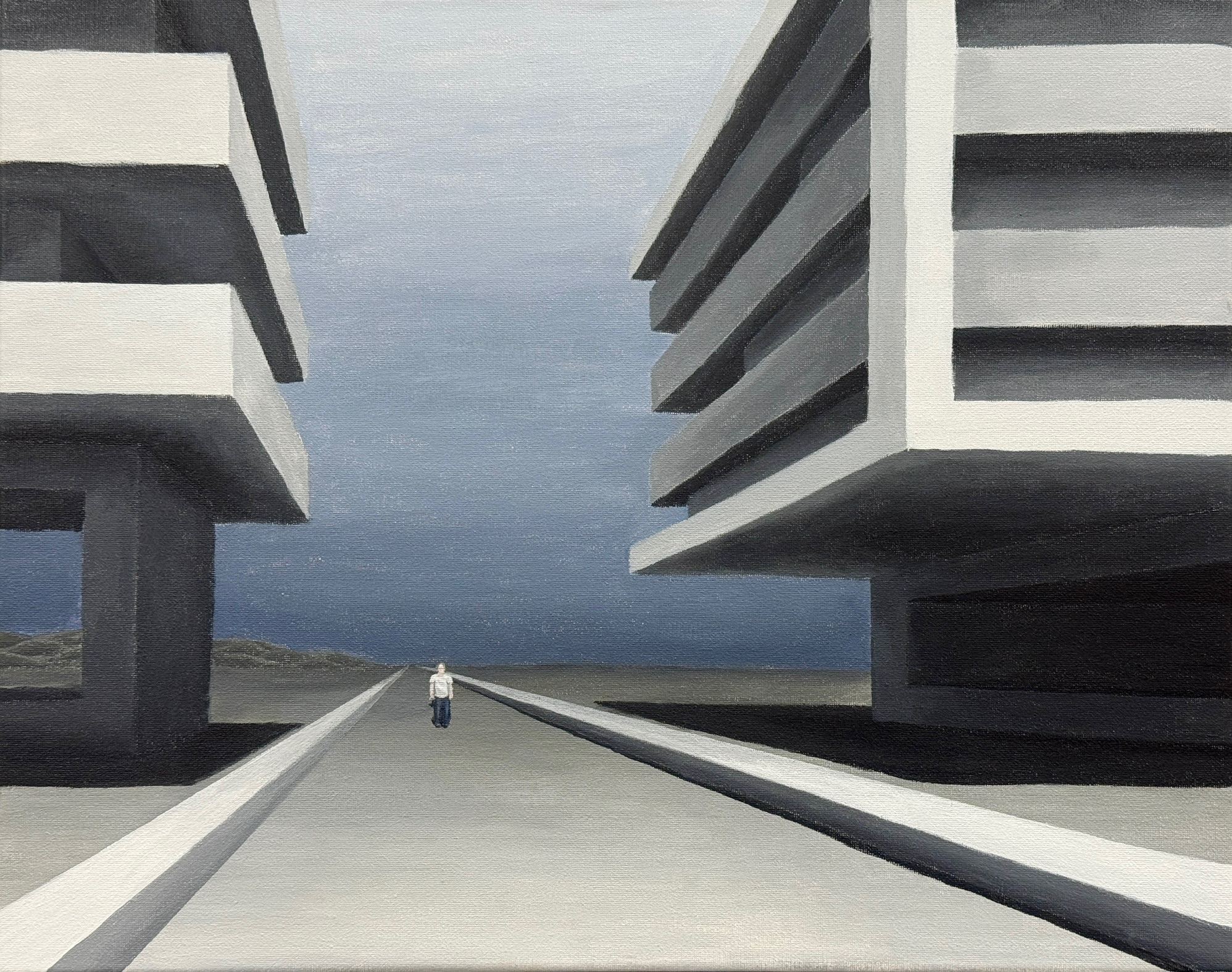
My work is driven by experimentation. Whether it’s shooting film or creating my own makeshift camera parts, I am always seeking to learn and innovate. I design and 3D print lens adapters and create unconventional lenses using simple materials. I am particularly drawn to analog processes, alternative film stocks, and imperfect optics because they introduce unpredictability and distortion. These experiments allow me to manipulate perception in ways that echo my artistic concerns, including social detachment, isolation, and the distant, apathetic nature of contemporary society.
I am influenced by early photographic technology, minimalist aesthetics, and artists who embrace chance and imperfection as integral parts of the creative process. Architecture and urban spaces often serve as my subjects, not for their literal presence but for their abstract forms, rhythms, and emotional weight. Rather than striving for polished images, I let mood, composition, and material limitations guide my work.
Being an artist, to me, means reimagining how tools can be used and innovating the creative process through experimentation. At this point in my life, I feel compelled to pursue art more deeply—to engage with theory and critique, and to challenge my own habits and assumptions. Through focused study, I aim to strengthen my ability to translate technical exploration into meaningful visual work, using photography to explore how technology shapes both images and human experience.